
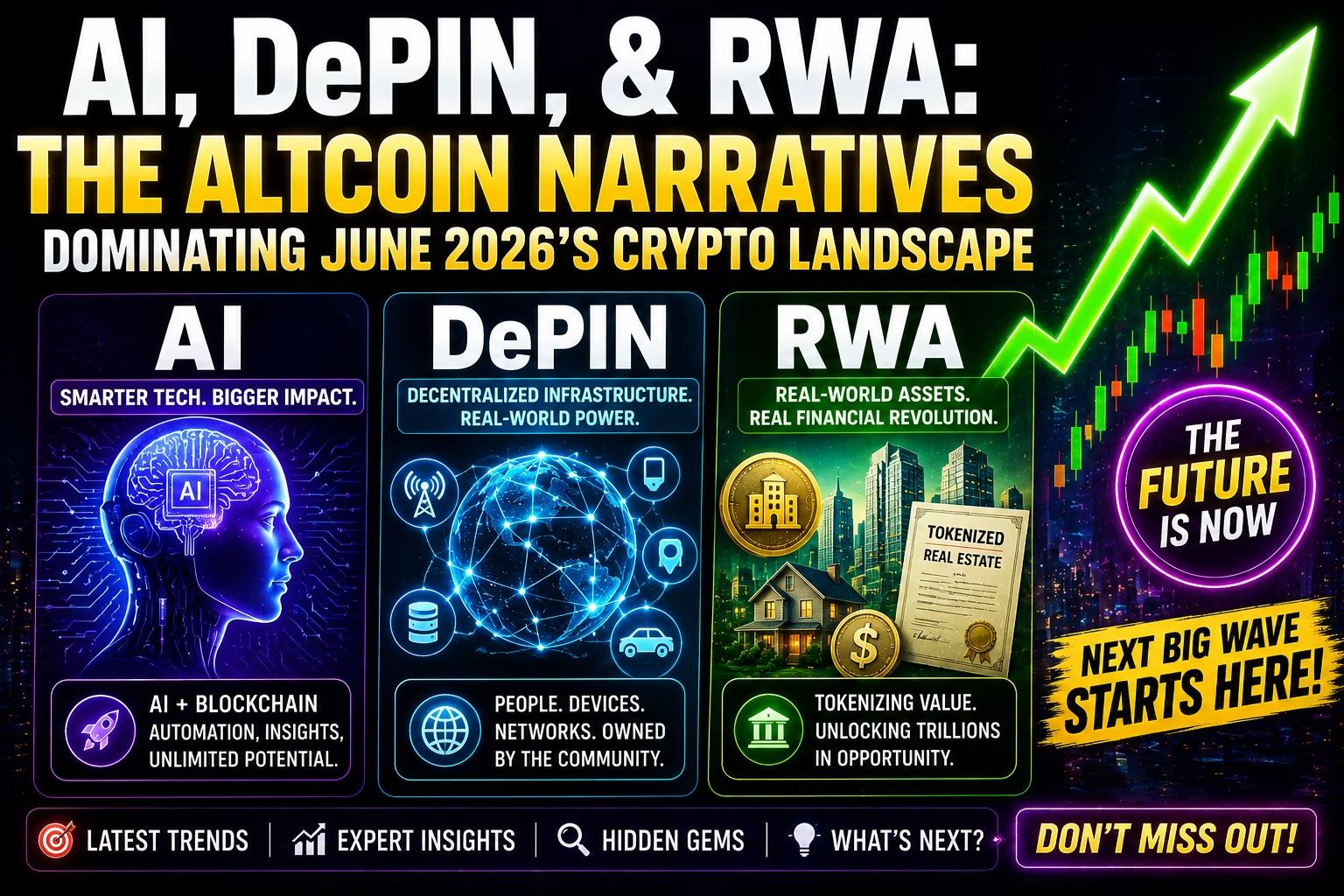
Many investors are wondering what’s driving the crypto market right now. With so much happening, it’s hard to keep track of which trends are just hype and which are here to stay. What’s truly moving the needle for altcoins in June 2026?
In this article, you’ll learn:
- What’s happening in the altcoin market this June.
- Why these specific trends matter for investors.
- The economic and financial impact of these trends.
- The risks and opportunities involved.
- What to watch for in the coming months.
What is driving altcoin performance in June 2026?
The cryptocurrency market in June 2026 is seeing a significant shift. Instead of just speculative hype, institutional capital is flowing into areas with real-world utility. This is largely driven by three major narratives: Artificial Intelligence (AI), Decentralized Physical Infrastructure Networks (DePIN), and Real-World Asset (RWA) tokenization. These trends are not just buzzwords; they represent fundamental changes in how we use and think about blockchain technology. They are attracting serious investment and development, creating new opportunities for altcoins.
Beyond crypto narratives, investor interest in AI is also growing in traditional markets—read The Surge in Paint Stocks: What’s Behind the Recent Growth? for another market trend worth watching.
What are AI crypto coins and why are they important?
AI crypto coins are cryptocurrencies linked to projects that use artificial intelligence to improve blockchain applications. This can involve AI-driven trading algorithms, decentralized AI marketplaces, or smart contract automation. The fusion of AI and blockchain is creating powerful new use cases, from decentralized computing and data management to AI model training and agent networks. Projects in this space are seeing significant development, with companies like NVIDIA projecting trillions in chip demand through 2027, highlighting the immense need for the infrastructure AI crypto projects provide.
How is AI being integrated into blockchain?
AI is being integrated into blockchain in several key ways. For starters, AI is being used to enhance blockchain operations, making them more efficient and secure. Think of AI-powered code debugging or natural language interfaces for decentralized applications (dApps). Beyond that, AI is driving the need for decentralized compute power. Projects like Bittensor (TAO) are creating decentralized marketplaces for AI where models compete and collaborate. Render Network (RNDR) provides a decentralized platform for GPU computing, essential for 3D graphics and AI model processing. Near Protocol (NEAR) is also positioning itself as a “Blockchain of AI,” focusing on infrastructure for AI agents and autonomous transactions.
Which AI crypto coins are leading the charge?
Several AI crypto projects are gaining significant traction in 2026. Bittensor (TAO) is a prominent example, aiming to build a decentralized AI marketplace. The Artificial Superintelligence Alliance (FET), formed by Fetch.ai, SingularityNET, and Ocean Protocol, is another major player, focusing on democratizing AI through decentralized applications. Render Network (RNDR) is crucial for providing the GPU power needed for AI tasks. Near Protocol (NEAR) is also a strong contender, with its focus on AI infrastructure and agentic commerce. These projects are not just about AI; they are building the infrastructure that the AI revolution will depend on.
What is the market outlook for AI crypto?
The market outlook for AI crypto is very positive, driven by massive demand for computing power and AI-driven services. Projects that offer real-world AI applications, have active communities, and strong technical teams are poised for growth. As AI continues to advance, the need for decentralized, efficient, and scalable infrastructure will only increase, making AI crypto coins a key sector to watch.
What are DePIN coins and why are they gaining traction?
DePIN, or Decentralized Physical Infrastructure Networks, represents a significant shift in how we can build and manage physical infrastructure using blockchain. These networks connect digital coordination with real-world services like storage, wireless connectivity, and computing power. In 2026, DePIN is exploding because it addresses critical infrastructure needs, particularly for AI. The demand for GPUs, storage, and bandwidth is skyrocketing, and DePIN projects offer decentralized, often cheaper, alternatives to traditional Big Tech clouds. Projects like Render, Akash, and io.net are already seeing high GPU utilization due to AI demand, demonstrating real-world usage.
How do DePIN projects generate value?
DePIN projects generate value by incentivizing individuals and businesses to contribute physical resources to decentralized systems. For example, the Render Network coordinates GPU owners to rent out their computing power for rendering and AI tasks. Akash Network functions as a marketplace for spare CPU and GPU power. These networks create programmable markets for real resources, aligning token demand with actual network usage and revenue.
What are the leading DePIN projects?
The DePIN sector is led by established networks and emerging specialists. Core infrastructure players like Helium (offering decentralized wireless connectivity) and Filecoin (decentralized storage) are well-known. Render Network (RNDR) is a powerhouse in decentralized GPU computing, vital for AI workloads. Akash Network (AKT) is another key player in decentralized cloud compute. These projects are not just theoretical; they are generating measurable real-world revenue and activity.
What is the future outlook for DePIN?
The future for DePIN looks very bright. The sector’s market cap has already surpassed $16 billion by late 2025, with projections for significant continued growth. The convergence of AI demand with the need for decentralized infrastructure makes DePIN a compelling investment category. As more physical infrastructure is tokenized and integrated into Web3, DePIN projects are expected to become even more critical.
What is RWA tokenization and why is it significant?
RWA tokenization refers to the process of representing real-world assets, such as real estate, bonds, or even art, as digital tokens on a blockchain. This narrative is significant because it bridges the gap between traditional finance and the crypto world, opening up new investment avenues and increasing liquidity for traditionally illiquid assets. By early 2026, RWA tokenization has moved beyond experimentation to become a multi-billion-dollar financial vertical.
How does RWA tokenization impact the market?
RWA tokenization is democratizing access to investments. Previously inaccessible assets like private credit and tokenized equities are now available to a broader range of investors. Platforms like Ondo Finance and Centrifuge are enabling users to earn yields on tokenized assets, decoupling them from the volatility of the broader crypto market. This trend is attracting significant institutional interest, with major financial firms actively participating in tokenizing assets.
What are the key RWA projects to watch?
Several projects are at the forefront of RWA tokenization. Ondo Finance (ONDO) is a pioneer in tokenizing real-world assets, particularly focusing on U.S. Treasuries and private credit. Centrifuge is another important platform that allows businesses to tokenize invoices and other assets to access financing. The growth of these platforms, alongside frameworks like Chainlink’s for RWA, signifies a maturing market.
What are the future prospects for RWAs?
The future for RWAs is exceptionally strong. The total value of tokenized real-world assets is projected to grow exponentially. As regulatory clarity improves and more traditional financial institutions embrace blockchain, RWAs are expected to become a cornerstone of the digital economy, offering stable yields and new investment opportunities.
What are the economic and financial impacts of these trends?
The economic and financial impact of AI, DePIN, and RWA tokenization is substantial. These trends are creating new markets, enhancing efficiency, and driving innovation. For AI, it means a surge in demand for computing power and the development of new AI-driven services. DePIN is building critical digital infrastructure that supports these growing demands, often at a lower cost than traditional solutions. RWA tokenization is injecting liquidity into traditional markets, making assets more accessible and creating new yield-generating opportunities. Together, these trends are fostering a more interconnected and efficient digital economy.
What risks and opportunities exist for investors?
Investing in altcoins, especially those tied to emerging narratives like AI, DePIN, and RWA, comes with both significant opportunities and inherent risks. The opportunity lies in being an early investor in potentially transformative technologies that could see massive growth. For instance, identifying undervalued projects with strong fundamentals before they hit mainstream attention can yield substantial returns, similar to the early success of Solana (SOL).
What are the potential opportunities?
The opportunities are vast. Investors can gain exposure to the booming AI sector through projects building essential infrastructure. The growth of DePIN offers a chance to invest in the backbone of future decentralized networks. RWA tokenization presents a way to tap into the traditional financial markets with digital assets, offering potentially stable yields. Early investment in projects with clear use cases, strong development teams, and growing adoption can lead to significant long-term gains.
What are the key risks to consider?
However, investors must be aware of the risks. The altcoin market is inherently volatile, and projects in these emerging sectors can be highly speculative. Technological failures, intense competition from established players, and regulatory uncertainty are significant concerns, particularly for AI and DePIN projects. For RWAs, regulatory hurdles and the complexities of bridging traditional finance with blockchain can pose challenges. It’s crucial to conduct thorough research, understand the tokenomics, and only invest what you can afford to lose. Diversification across different narratives and projects is also a key strategy to mitigate risk.
How does this compare to past market trends?
The current market trends in June 2026, particularly the focus on AI, DePIN, and RWAs, represent a maturation of the crypto space. Unlike the speculative frenzy of earlier years, which often centered on meme coins or unproven concepts, today’s leading narratives are grounded in real-world utility and infrastructure needs. The AI crypto trend, for example, is driven by genuine demand for computing power and advanced analytics, not just a catchy name. Similarly, DePIN projects are building tangible infrastructure, moving beyond abstract digital concepts. The rise of RWAs shows a clear integration with traditional finance, a stark contrast to the early days when crypto was seen as an alternative to the established financial system. This shift towards utility and infrastructure is a sign of a more mature and sustainable market cycle.
What should investors watch next?
For investors looking ahead, several factors will be critical to monitor. The continued development and adoption of AI technologies will directly impact the demand for AI crypto infrastructure. For DePIN, growth will depend on expanding real-world usage and scaling networks to meet increasing demand. The regulatory landscape for RWA tokenization will play a significant role in its mainstream adoption. Additionally, keep an eye on how these narratives converge. Projects that successfully integrate AI, DePIN, and RWA elements may offer the most compelling opportunities. Broader market sentiment, influenced by macroeconomic conditions and institutional flows, will also continue to play a role.
Expert Analysis: What are the key takeaways?
Experts agree that the June 2026 altcoin market is driven by fundamental utility rather than pure speculation. The convergence of AI, DePIN, and RWAs represents a significant evolution of blockchain technology, moving it from a niche asset class to a foundational layer for future innovation. While volatility remains a characteristic of the crypto market, these narratives offer a clear path towards sustainable growth and real-world adoption. Investors who focus on projects with strong fundamentals, clear use cases, and tangible adoption in these key sectors are likely to be best positioned for the future.
Frequently Asked Questions (FAQs)
What are the top altcoins to watch in June 2026?
In June 2026, the top altcoins to watch are those deeply involved in the AI, DePIN, and RWA narratives. Projects like Bittensor (TAO), Render Network (RNDR), Near Protocol (NEAR) for AI; Render (RNDR), Akash Network (AKT), Helium (HNT) for DePIN; and Ondo Finance (ONDO) for RWA tokenization are leading the way.
Is AI crypto a good investment in 2026?
AI crypto presents a promising, albeit speculative, investment opportunity in 2026. The demand for AI infrastructure is immense, and projects building in this space have significant growth potential. However, it’s crucial to invest cautiously, focusing on projects with real utility and strong technical foundations, as the sector is still evolving and carries inherent risks.
What is DePIN and how does it work?
DePIN stands for Decentralized Physical Infrastructure Networks. These networks use blockchain to coordinate and incentivize the contribution of physical resources like storage, computing power, and bandwidth. Users are rewarded with tokens for contributing to the network, creating decentralized alternatives to traditional infrastructure services.
How is Real-World Asset (RWA) tokenization changing finance?
RWA tokenization is transforming finance by making illiquid assets like real estate and private credit accessible to a wider range of investors through digital tokens. It increases liquidity, democratizes investment opportunities, and bridges traditional finance with the blockchain ecosystem.
Are there risks associated with investing in emerging altcoins?
Yes, investing in emerging altcoins carries significant risks. These include high market volatility, potential technological failures, intense competition, and regulatory uncertainty. It’s essential to conduct thorough due diligence and understand the specific risks associated with each project before investing.
What is the difference between AI crypto and DePIN?
AI crypto projects focus on integrating artificial intelligence with blockchain for applications like AI-driven analytics, decentralized marketplaces, and AI model training. DePIN projects, on the other hand, focus on building decentralized physical infrastructure networks, such as decentralized storage, computing, or wireless networks, which often serve as the underlying infrastructure for AI applications.
What is the role of tokenomics in AI and DePIN projects?
Tokenomics are crucial for AI and DePIN projects as they define how tokens are used, distributed, and incentivized within the network. Well-designed tokenomics encourage participation, reward contributions, and align the interests of all stakeholders, driving network growth and utility.
How are traditional institutions engaging with RWA tokenization?
Traditional financial institutions are increasingly engaging with RWA tokenization by participating in pilot programs, developing tokenization platforms, and investing in RWA-focused projects. This integration signals a growing acceptance of blockchain technology within mainstream finance.
What are the key metrics to evaluate AI and DePIN projects?
Key metrics to evaluate AI and DePIN projects include developer activity, network usage, total value locked (TVL), partnerships, community engagement, and revenue generation. For AI projects, consider the advancement of their AI models and practical applications. For DePIN, look at network uptime, hardware adoption, and service demand.
What is the future outlook for altcoins in 2026 beyond AI, DePIN, and RWA?
While AI, DePIN, and RWA are dominant narratives, other trends like modular blockchains, zero-knowledge privacy, and prediction markets are also significant for 2026. The most successful projects may combine elements from multiple narratives, creating innovative solutions at their intersection.
Key Takeaways:
- The altcoin market in June 2026 is driven by practical utility, focusing on AI, DePIN, and RWA tokenization narratives.
- AI crypto projects are building the essential infrastructure for the growing AI revolution, demanding significant compute power.
- DePIN networks are creating decentralized physical infrastructure, essential for supporting AI and other decentralized applications.
- RWA tokenization is bridging traditional finance with crypto, making illiquid assets accessible and increasing market liquidity.
- While opportunities are substantial, investors must be aware of the inherent volatility and risks associated with emerging altcoins.
- Future success will likely come from projects that integrate these narratives and demonstrate real-world adoption and utility.
For more beginner-friendly market insights, crypto analysis, and investment guides, visit financewithxpert
COMMENTS