
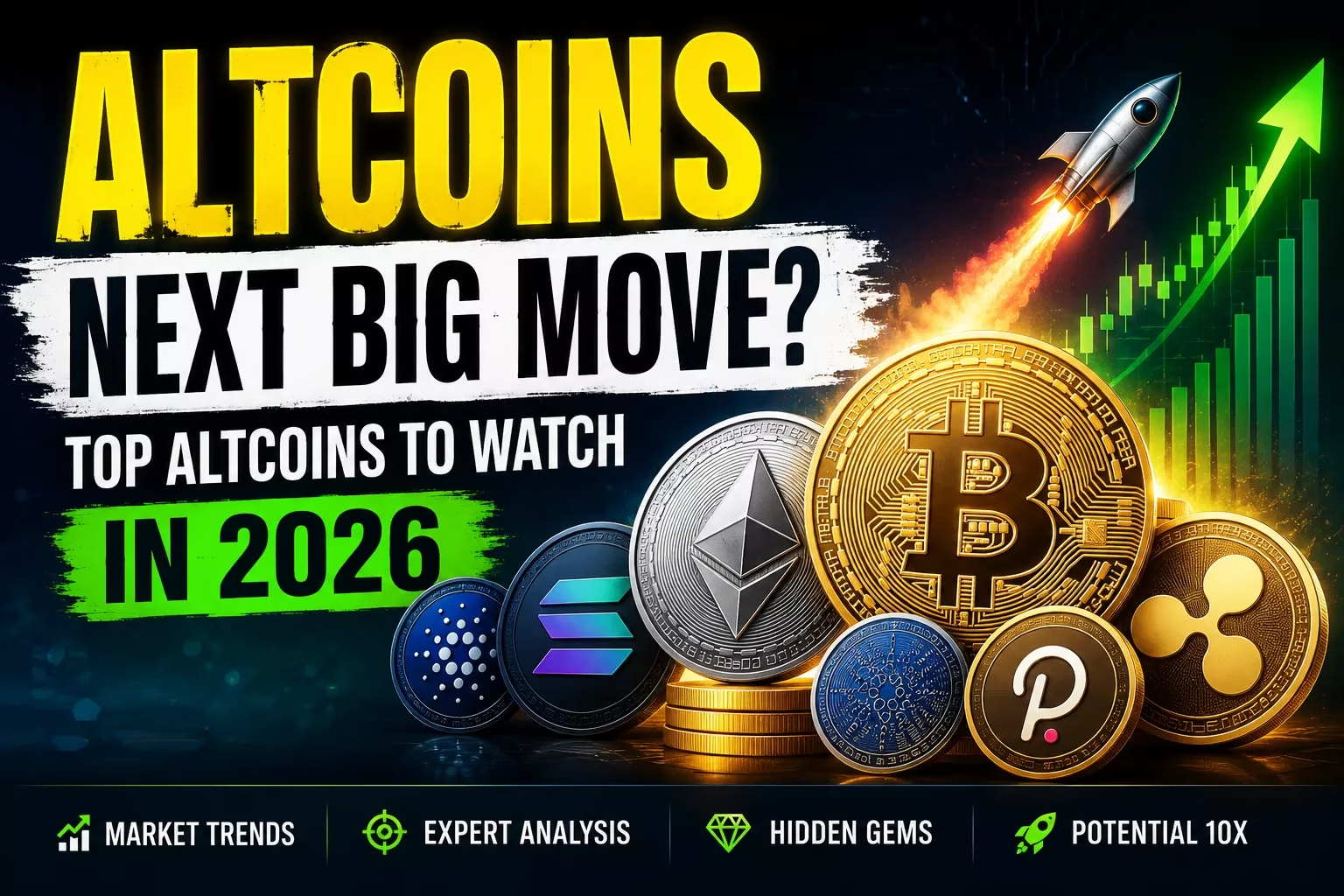
We’ve all seen the headlines. Bitcoin takes a big leap, and then the altcoin market seems to go wild. But lately, there’s a different buzz. People are asking if these smaller, newer cryptocurrencies are still the golden ticket they once seemed to be. Is the excitement fading, or is this just a natural part of the crypto cycle? It’s a question on a lot of investors’ minds right now.
In this article, readers will understand:
- What’s happening with altcoins in 2026.
- Why these trends matter to your money.
- The real financial and economic effects.
- The possible upsides and downsides.
- What to keep an eye on as things change.
What’s Going On with Altcoins This Year?
Altcoins in 2026 are showing a mixed bag of results. Some are hitting new highs, while many others are struggling to gain traction. The market feels more selective than before. Investors seem to be looking for projects with solid technology and clear use cases, not just hype. This is a big shift from the speculative frenzy seen in earlier years. The overall crypto market sentiment, often influenced by Bitcoin’s performance, plays a huge role. When Bitcoin is stable or rising, it often brings the rest of the market up with it. However, if Bitcoin faces a downturn, altcoins tend to suffer more, experiencing sharper drops.
Why Does This Altcoin Shift Matter?
This shift matters because it directly impacts how investors can grow their wealth in the crypto space. The days of blindly investing in any new altcoin and expecting huge returns are likely over. Now, it requires more research and a deeper understanding of the technology behind each project. For those who have been in crypto for a while, this might feel like a return to fundamentals. For newcomers, it means the entry barrier is a bit higher, demanding more due diligence. It also signals a maturing market, where sustainability and real-world application are becoming more important than quick speculation.
What Has Actually Changed in the Altcoin Market?
Several factors have changed the altcoin landscape. Firstly, increased regulatory scrutiny globally is making projects more cautious. Companies are focusing on compliance, which can slow down innovation but also build trust. Secondly, the technology itself is evolving rapidly. New blockchain solutions and scalability improvements are constantly emerging, making older projects seem outdated. Think about how quickly smartphones replaced older models; the same is happening in crypto. Finally, the sheer number of altcoins available has exploded. With thousands of tokens out there, it’s harder for any single one to stand out without a truly compelling reason.
How Are These Changes Affecting Investors?
Investors are facing a more challenging environment. The “get rich quick” allure of some altcoins has dimmed. Instead, there’s a greater focus on long-term value and risk management. This means more diversification across different types of altcoins and a closer look at project fundamentals. For example, an investor might now allocate funds to established altcoins with strong ecosystems, like Ethereum, alongside promising but riskier new tokens that have clear technological advantages. The need for thorough research is paramount. Projects with strong development teams, active communities, and clear roadmaps are more likely to attract serious investment. This increased diligence is crucial for navigating the current market.
What’s the Financial Impact of the Current Altcoin Trends?
Financially, the impact is significant. We’re seeing a wider gap between the performance of top-tier altcoins and smaller, lesser-known ones. Established altcoins with robust ecosystems and proven use cases are generally holding their value better and showing more consistent growth. For instance, projects focused on decentralized finance (DeFi) or non-fungible tokens (NFTs) with real utility are attracting more capital. Conversely, many altcoins launched with little more than a whitepaper and a social media campaign are failing to gain any significant market share. This bifurcation means that capital is concentrating in fewer, more promising projects, leading to higher valuations for them, while the rest languish.
Consider the market capitalization trends. While the total crypto market cap fluctuates, the dominance of Bitcoin and a few major altcoins has increased. This means a smaller percentage of the total market value is spread across the thousands of smaller altcoins. This concentration of value can lead to greater volatility in the altcoin market as a whole, as large movements in a few key assets can skew the overall picture. For example, if a major altcoin experiences a significant price drop, it can drag down the entire altcoin index, even if many other smaller altcoins are performing well.
What is the Broader Economic Impact?
On a larger economic scale, the altcoin market’s performance can influence venture capital investment in blockchain technology. When altcoins are thriving, it signals confidence in the underlying innovation, encouraging more funding for startups in the space. Conversely, a prolonged downturn in altcoins can make investors more hesitant, potentially slowing down the development of new blockchain applications. This has ripple effects, impacting job creation in the tech sector and the adoption of decentralized technologies across various industries, from supply chain management to digital identity.
Furthermore, the success of certain altcoins can highlight specific economic models, like tokenomics designed for utility or governance. As these models mature and prove their viability, they can offer new frameworks for digital economies. For example, a successful altcoin that powers a decentralized social media platform could inspire new ways of thinking about data ownership and creator economies. The economic implications extend to how value is transferred and stored globally, potentially challenging traditional financial systems if altcoins achieve widespread adoption and stability.
How is the Market Reacting to These Developments?
The market reaction in 2026 is one of increased caution and selectivity. Trading volumes for many smaller altcoins have decreased, indicating less speculative interest. Institutional investors, who were once hesitant, are now more involved but are focusing on projects with strong fundamentals and regulatory compliance. This cautious approach means that rallies are often shorter and more driven by specific news or technological advancements rather than broad market sentiment. We are seeing a trend where established projects, like those on smart contract platforms that support a wide range of applications, are garnering more attention and investment. This is a departure from the “spray and pray” approach that characterized earlier bull runs.
What is the Investor Perspective in 2026?
From an investor’s viewpoint, the 2026 altcoin market demands a strategic approach. Many are shifting their focus from short-term gains to long-term value creation. This involves thorough due diligence, understanding the technology, team, and tokenomics of any project before investing. Portfolio diversification is key. Instead of putting all funds into one or two speculative altcoins, investors are spreading their risk across different categories, such as DeFi tokens, platform tokens, and utility tokens. There’s also a growing interest in staking and yield farming opportunities within established altcoin ecosystems, which offer a way to earn passive income while holding assets. This approach is often seen as more sustainable than relying solely on price appreciation.
For instance, an investor might allocate a portion of their portfolio to a well-established altcoin like Ethereum, which is known for its robust network and extensive developer community. They might then diversify further by investing in a few carefully selected altcoins that address specific market needs, such as supply chain management or decentralized data storage. The emphasis is on projects that have a clear path to adoption and a sustainable business model. This detailed analysis helps to mitigate the inherent volatility of the altcoin market and increases the probability of long-term success.
What About the Consumer Perspective?
For consumers, the altcoin market in 2026 is becoming more about utility than speculation. While some still see altcoins as investment opportunities, many others are interacting with them through decentralized applications (dApps). For example, consumers might use tokens to pay for services on a decentralized platform, participate in decentralized governance, or access unique digital content. The user experience for many dApps is improving, making them more accessible to the average person. This growing utility can indirectly drive demand for the underlying altcoins, as more people use the services they power.
Think about how mobile apps changed our daily lives. Similarly, dApps built on various blockchains are starting to offer practical solutions. A consumer might use a decentralized exchange (DEX) to trade tokens, a decentralized lending platform to earn interest on their crypto, or a blockchain-based game to purchase in-game assets. Each of these interactions often requires holding or using specific altcoins. As these applications become more user-friendly and offer tangible benefits, they can attract a wider audience, creating a positive feedback loop for the altcoin ecosystem. This move towards real-world use cases is crucial for the long-term viability of many emerging tokens.
What Are the Risks and Opportunities in 2026?
The risks in the altcoin market remain significant. Volatility is a given; prices can swing dramatically in short periods. Regulatory uncertainty continues to be a major concern, as new rules could impact certain tokens or entire sectors of the market. Many altcoins still lack real-world adoption and may never achieve their projected goals, leading to total loss of investment. Scams and rug pulls, while less prevalent than before due to increased awareness, still pose a threat. The technical complexity of some projects can also be a barrier to entry and understanding.
However, the opportunities are also substantial for those who do their homework. Early investment in genuinely innovative projects with strong fundamentals can yield significant returns. The development of new blockchain technologies, such as improved scalability solutions and enhanced interoperability between different networks, opens up new possibilities. Altcoins that focus on specific niches, like sustainable energy, decentralized AI, or advanced healthcare solutions, could see substantial growth if they can deliver on their promises. The increasing institutional interest, while cautious, also signals a growing maturity and potential for wider adoption, which could drive up prices across the board for well-vetted projects.
How Do 2026 Trends Compare to Historical Altcoin Cycles?
Looking back, the altcoin market has always been characterized by cycles of extreme hype followed by sharp corrections. The boom and bust of 2017, the subsequent bear market, and the resurgence in 2021 all followed similar patterns. What seems different in 2026 is a greater emphasis on sustainability and utility. While past cycles were often driven by pure speculation and the promise of future gains, this cycle appears to be more grounded in the actual development and adoption of blockchain technology. We’re seeing fewer “meme coins” with no underlying value achieving massive valuations, and more focus on projects with tangible use cases and solid technological foundations.
Historically, Bitcoin’s performance has often dictated the broader market trend. When Bitcoin surges, it tends to draw attention and capital that eventually flows into altcoins. Conversely, Bitcoin’s downturns often precede steeper drops in altcoins. In 2026, this correlation is still present, but the underlying drivers for altcoin success are becoming more independent. Projects that offer unique solutions or technological advancements can sometimes buck the trend, performing well even during broader market dips. This suggests a market that is maturing and becoming less dependent on Bitcoin’s every move, although Bitcoin remains the dominant force.
What Does the Future Outlook for Altcoins Look Like?
The future outlook for altcoins in 2026 and beyond hinges on several key factors. Continued innovation in blockchain technology, particularly in areas like scalability, security, and interoperability, will be crucial. Widespread adoption of decentralized applications across various sectors will drive demand for underlying tokens. Regulatory clarity will play a significant role in fostering trust and attracting more mainstream investment. Projects that can demonstrate real-world utility, solve pressing problems, and build strong, engaged communities are most likely to succeed. We may see further consolidation, with a few dominant altcoins and platforms emerging, while many smaller, less viable projects fade away.
The trend towards real-world integration is likely to accelerate. This could mean altcoins being used for more than just speculation or in-app purchases. Imagine altcoins playing a role in carbon credit markets, verifying intellectual property, or facilitating micro-transactions in the metaverse. As the digital and physical worlds become more intertwined, the demand for secure, transparent, and efficient digital asset solutions will likely grow. Projects that can bridge this gap will be well-positioned for long-term success.
What Do Experts Say About Altcoins in 2026?
Experts generally agree that the altcoin market in 2026 is in a phase of maturation. They emphasize that while the speculative frenzy of past years may have subsided, the underlying technology continues to advance at an impressive pace. Many analysts point to the development of Layer 2 scaling solutions and cross-chain bridges as critical infrastructure that will enable broader adoption. They highlight the importance of projects with strong fundamentals, active development teams, and clear roadmaps. For example, some experts believe that altcoins powering decentralized identity solutions or advanced AI applications have significant long-term potential. Others caution that the regulatory landscape remains a significant unknown and could shape the market dramatically. The consensus is that careful research and a long-term perspective are more important than ever.
What Are the Practical Takeaways for Investors?
For investors looking at altcoins in 2026, the practical advice is clear: do your homework. Understand the technology behind a project before investing. Look for strong development teams and active communities. Diversify your portfolio to spread risk. Consider projects with real-world use cases and sustainable tokenomics. Don’t invest more than you can afford to lose, as the market remains highly volatile. Keep an eye on regulatory developments, as they can significantly impact the market. For those interested in longer-term holdings, exploring staking opportunities within established altcoin ecosystems can provide passive income. Remember that genuine innovation often takes time to gain traction, so a patient approach can be rewarding.
Key Takeaways
- The altcoin market in 2026 is more selective, prioritizing utility and solid technology over pure hype.
- Regulatory scrutiny and rapid technological advancements are key factors shaping the market.
- Investors need to conduct thorough due diligence and diversify their portfolios.
- Real-world adoption of decentralized applications is driving demand for altcoins.
- While risks like volatility and regulatory uncertainty remain, opportunities exist for innovative projects.
- The market is maturing, moving towards more sustainable growth driven by utility rather than just speculation.
Final Conclusion
The altcoin landscape in 2026 is certainly different from its earlier, more speculative phases. It’s a market that rewards research, patience, and a clear understanding of technology and utility. While the wild, untamed growth of some past cycles might be behind us, this doesn’t mean the potential for significant returns has vanished. Instead, it has shifted towards projects that are building real solutions and ecosystems. For investors willing to put in the effort to understand these evolving digital assets, the opportunities to participate in the next wave of blockchain innovation are still very much present. It’s less about chasing quick gains and more about identifying the foundational technologies that could shape our digital future.
Frequently Asked Questions About Altcoins in 2026
Are altcoins still a good investment in 2026?
Altcoins can still be good investments in 2026, but the market is more discerning. Investors should focus on projects with strong technology, clear use cases, and solid development teams. The speculative boom of past years has given way to a more mature market that values utility and long-term potential.
What is the biggest risk with altcoins today?
The biggest risks with altcoins today include high volatility, regulatory uncertainty, and the potential for project failure or scams. Many smaller altcoins lack real-world adoption and may never achieve their goals, leading to a complete loss of investment.
How has the altcoin market changed since previous years?
The altcoin market has become more mature. There’s a greater emphasis on utility, real-world applications, and regulatory compliance. The sheer number of altcoins means it’s harder for new ones to stand out without a unique value proposition, and speculative hype alone is less effective.
Should I invest in new altcoins or established ones in 2026?
A balanced approach is often recommended. Established altcoins, like those with large ecosystems and proven track records, offer more stability. New altcoins can offer higher growth potential but come with significantly higher risk. Thorough research is essential for both categories.
What makes an altcoin project successful in 2026?
Success in 2026 typically comes from a combination of factors: innovative technology, a strong and active development team, a clear roadmap, real-world utility, a supportive community, and often, a focus on solving a specific problem or meeting a market need.
How do regulations affect altcoins?
Regulations can significantly impact altcoins. Increased scrutiny can lead to greater investor confidence and market stability if clear rules are established. However, unfavorable regulations can stifle innovation, limit access, or even lead to the delisting of certain tokens from exchanges.
Is it still possible to get rich quick with altcoins in 2026?
While extremely rare and highly risky, it’s not impossible to see rapid gains with certain altcoins. However, the market has become more efficient, and relying on “get rich quick” schemes is a very unreliable and often losing strategy. Focusing on long-term value is a more sustainable approach.
COMMENTS